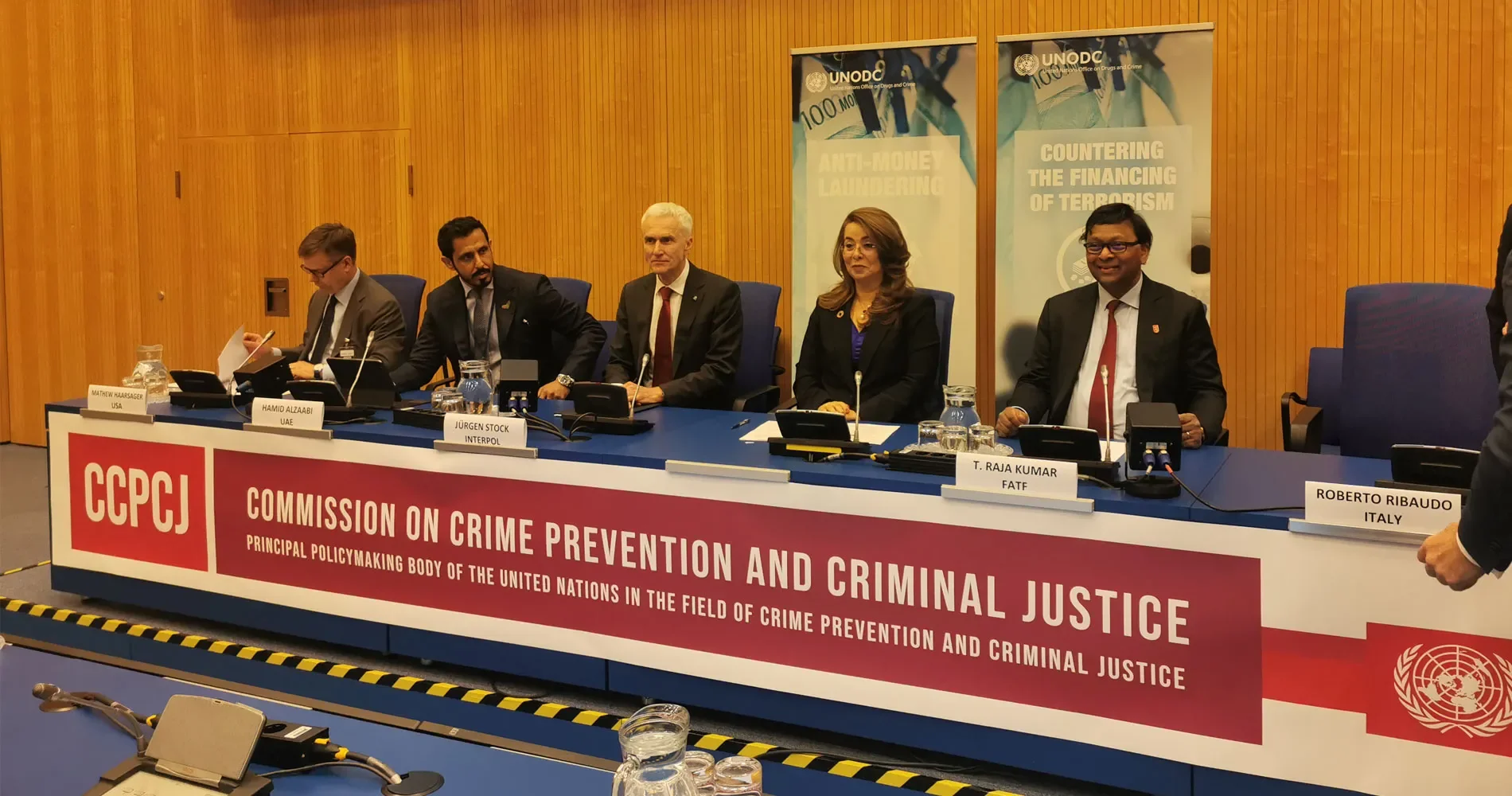
ECOSOC: Commission on Crime Prevention and Criminal Justice (CCPCJ)

APPROXIMATE COMMITTEE SIZE: 50

The Economic and Social Council (ECOSOC) is one of the six principal organs of the United Nations, responsible for addressing global economic, social, and development challenges. It serves as a platform for Member States to exchange ideas, coordinate initiatives, and promote cooperation on key issues. Within ECOSOC, the Commission on Crime Prevention and Criminal Justice (CCPCJ) focuses on improving criminal justice systems, strengthening the rule of law, and tackling transnational crime. Debate in this committee is grounded and pragmatic, as delegates balance national interests with the global goal of justice and security.

This year, the CCPCJ focuses on two major issues: preventing environmental crimes and illegal resource exploitation, and combatting corruption as a facilitator of organized crime. Illegal logging, mining, and wildlife trafficking destroy ecosystems, fund criminal groups, and destabilize communities. At the same time, corruption allows these networks to thrive, undermining the rule of law and eroding trust in public institutions. Addressing these challenges requires cooperation between nations, stronger enforcement mechanisms, and greater transparency across sectors.

Delegates will work to design effective frameworks for prevention, accountability, and enforcement. They will consider strategies to curb illegal resource trade, enhance judicial cooperation, and cut off financial incentives that drive environmental destruction. In parallel, delegates will examine how corruption fuels organized crime, exploring reforms that improve oversight, strengthen anti-money laundering systems, and protect whistleblowers. The goal is to build a global response that safeguards both natural resources and institutions.

Topic A: Preventing environmental crimes & resource exploitation

Environmental crimes are among the fastest-growing forms of transnational crime, threatening biodiversity, economic stability, and community livelihoods. Illegal extraction of timber, minerals, and wildlife not only devastates ecosystems but also funds criminal organizations and fuels conflict. Weak governance, poor enforcement, and corruption make these crimes hard to detect and prosecute. Delegates will discuss how to strengthen international cooperation, close enforcement gaps, and promote sustainable resource management. They will also consider how trade regulation, technology, and community engagement can help stop the illegal exploitation of natural resources and ensure accountability for those involved.

What legal and operational measures should states adopt to detect and dismantle transnational networks that traffic timber, minerals, and wildlife? How should supply chain transparency, certification, and trade controls be balanced with the rights and livelihoods of local communities? What mechanisms should exist for international cooperation on asset recovery and prosecution in environmental crime cases?

Topic B: combatting corruption & organized crime

Corruption enables organized crime to grow unchecked. Bribery, fraud, and abuse of power weaken law enforcement, undermine justice, and allow criminal groups to operate across borders. In many cases, corruption acts as the foundation on which organized crime networks are built. Delegates will explore policies to strengthen transparency and accountability in both public and private sectors. They will discuss measures to detect and prevent corruption, protect whistleblowers, and enhance international cooperation on asset recovery. The challenge lies in creating institutions strong enough to resist criminal influence and uphold the rule of law.

Which institutional reforms provide the greatest leverage against corruption that enables organized crime, especially in fragile or resource rich states? How should financial investigation, beneficial ownership transparency, and asset recovery be coordinated across jurisdictions to interrupt criminal profit chains? What safeguards should be put in place to protect whistleblowers, investigators, and civil society actors who expose corruption linked to organized crime?

Background Guide

Your Dais


Arav Thyagarajan, Chair

Guhan Shanmugam, Vice Chair

 

Samantha Huang, Staffer

, Staffer

, Staffer